
The Shape of a Suffering Humanity
Les MisérablesThis thread links the suffering of prisoners, women, and children to the novel’s insistence that social misery is a collective moral problem.
increasing Bearing strength in each event
 decreasing
Bearing strength in each eventdecreasingA Society’s Abandoned Man
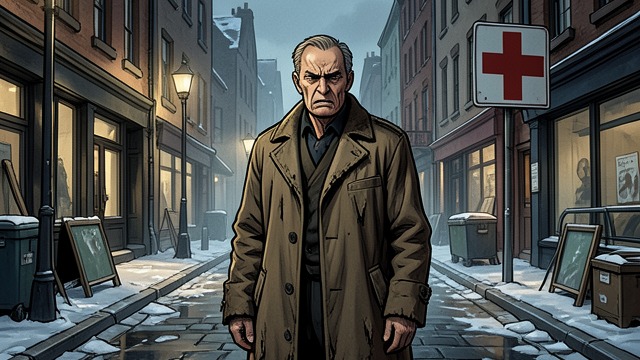
A Society’s Abandoned Man
A sentence that continues
Jean Valjean is legally released but socially marked as a former convict. He is refused shelter and treated as a threat before he has an opportunity to begin again.
The episode makes exclusion visible as an extension of punishment. The community’s response leaves the released man with few routes back into ordinary life.
A public question
The novel asks whether a society can call itself just when it keeps a person permanently outside its protection. Valjean’s anger is shaped by both his own choices and the conditions imposed on him.
His story turns a private journey into an argument about institutions. Redemption requires human welcome as well as personal effort.
Fantine Made Poor

Fantine Made Poor
Judgment and precarity
Fantine tries to support herself and Cosette through work, but she is dismissed after her coworkers discover that she is a single mother. No investigation protects her from gossip or gives her a chance to explain.
As income disappears, she sells her hair and teeth to answer the Thénardiers’ demands. Her poverty is intensified by the people and institutions that claim to judge her.
A social indictment
Fantine’s decline shows how a woman can be pushed from work into desperation by shame and economic insecurity. Her devotion to Cosette is not enough to secure safety for either of them.
The novel refuses to treat her suffering as proof of moral failure. It presents her as a victim of social arrangements that punish vulnerability.
Cosette as a Child of Neglect
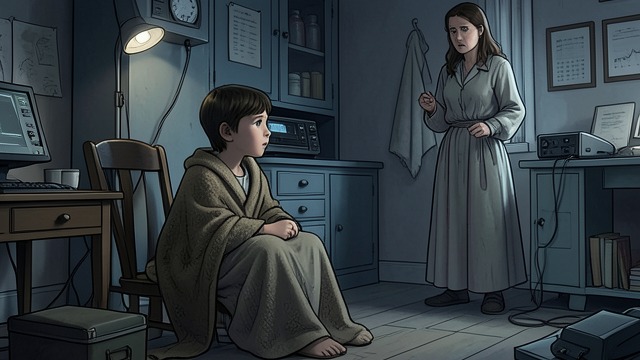
Cosette as a Child of Neglect
The cost of adult decisions
Cosette’s mother leaves her with adults she believes can provide care, but the Thénardiers exploit the arrangement. The child works, goes cold, and learns to anticipate violence.
Her suffering is not caused by a lack of innocence or a failure to behave well. It comes from dependence on adults who use their power against her.
Witness against indifference
Jean Valjean’s rescue matters because it interrupts a harm that the village has normalized. His intervention gives the child shelter and a chance to recover.
Cosette’s story joins tenderness to social criticism. A child’s rescue exposes the failure of a community that allowed the abuse to continue unseen.
The Street Child at War
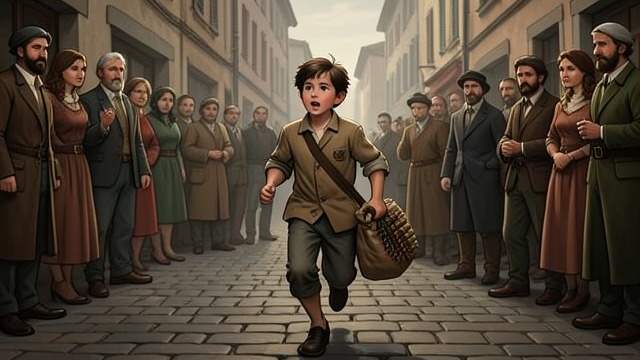
The Street Child at War
Childhood without protection
Little Gavroche grows up without parental care, making the streets his home. During the uprising, he helps the insurgents by scouting and collecting ammunition.
His skill and cheerfulness make him appear almost invulnerable. In reality, he is a child placed in adult danger because poverty and conflict have left him few protections.
A death that indicts
Little Gavroche is killed while gathering cartridges under fire. His courage does not make the death less unjust or the circumstances less preventable.
The scene joins political violence to the novel’s attention to vulnerable children. A society that abandons a child in peace cannot protect him when a city becomes a battlefield.
The Last Unmarked Grave
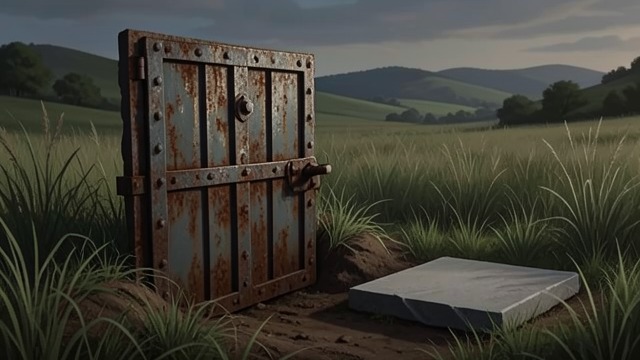
The Last Unmarked Grave
A modest burial
Jean Valjean asks to be buried without a name on his stone. After a life spent under public labels and assumed identities, he leaves no formal claim to recognition.
The grave is plain and remote, exposed to weather and the growth of grass. Its setting contrasts with the scale of the life it contains.
Memory without monument
Four lines are later written on the stone, but time and rain gradually erase them. The narrative closes by placing remembrance and forgetting beside each other.
Valjean’s legacy rests less in a monument than in the lives he changed. The unnamed grave echoes a novel that asks readers to notice people whom society would rather leave unseen.
October 1815, as Jean Valjean enters Digne
From 1818 to 1823, in Montreuil-sur-Mer
Christmas 1823, near Montfermeil
June 1832, during the Paris uprising
Several years after Jean Valjean’s death
